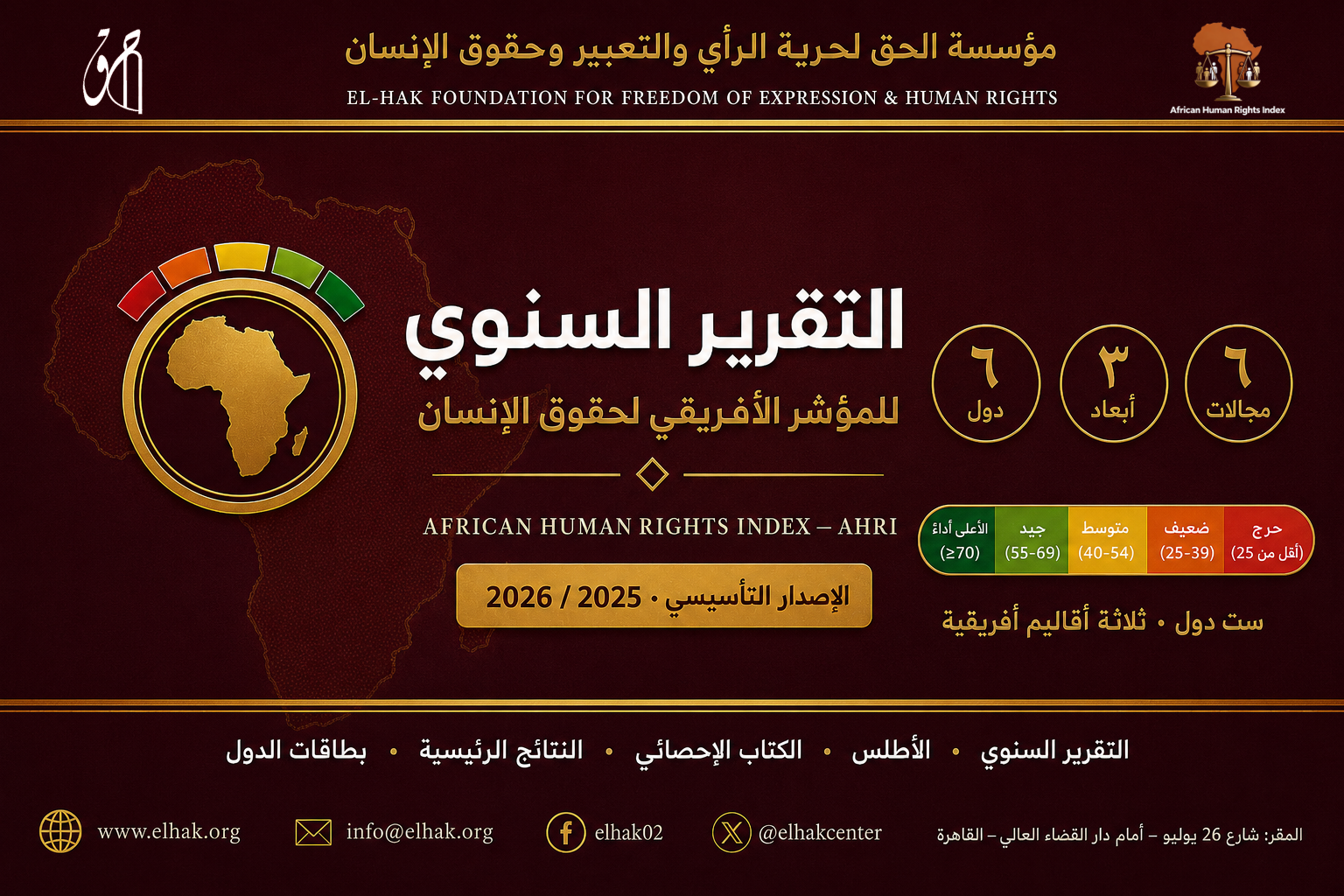
مؤسسة الحق تطلق الإصدار التأسيسي للمؤشر الإفريقي لحقوق الإنسان (AHRI 2025)

وسوم : - - - - - -
مؤسسة الحق تطلق الإصدار التأسيسي للمؤشر الإفريقي لحقوق الإنسان (AHRI 2025)
أول مؤشر إفريقي مستقل يعتمد منهجية علمية لقياس أوضاع حقوق الإنسان
وتحليل الفجوة بين الالتزام القانوني والتنفيذ الفعلي

English version below

القاهرة، جمهورية مصر العربية
التاريخ: 15/7/2026

أعلنت مؤسسة الحق لحرية الرأي والتعبير وحقوق الإنسان (EFHR) اليوم إطلاق الإصدار التأسيسي من التقرير السنوي للمؤشر الإفريقي لحقوق الإنسان (African Human Rights Index – AHRI 2025). ويمثل هذا الإصدار إحدى أبرز المبادرات البحثية المستقلة الهادفة إلى تطوير أداة إفريقية لقياس وتحليل أوضاع حقوق الإنسان استنادًا إلى منهجية علمية قائمة على البيانات والأدلة، بما يتيح إجراء مقارنات موضوعية بين الدول وعبر الزمن.

ويقدم التقرير تقييماً لواقع حقوق الإنسان في ست دول إفريقية تمثل أقاليم مختلفة من القارة، بالاعتماد على إطار تحليلي ثلاثي الأبعاد يشمل البعد الهيكلي وبعد العمليات وبعد النتائج، إلى جانب ستة مجالات موضوعية رئيسة تشمل تحليلات إحصائية متقدمة. ويمثل المؤشر انتقالًا من التقارير الوصفية التقليدية إلى نموذج تحليلي يقيس مدى قدرة الدول على تحويل التزاماتها القانونية والدستورية إلى حماية فعلية للحقوق والحريات، بما يوفر قراءة أكثر دقة وشمولًا لأداء منظومات حقوق الإنسان في القارة الإفريقية.

ويخلص التقرير إلى أن التحدي الرئيس الذي تواجهه العديد من الدول الإفريقية لا يكمن في نقص الأطر القانونية، وإنما في اتساع الفجوة بين الالتزامات التشريعية والتطبيق العملي. ويقدم المؤشر مفهوم “الفجوة التنفيذية” (Implementation Gap) باعتباره أحد أبرز الابتكارات المنهجية في هذا الإصدار، لقياس مدى انتقال الحقوق من النصوص إلى الممارسة الفعلية.

وقد أظهر الإصدار التأسيسي تفاوتًا واضحًا بين الدول الست محل الدراسة: جاءت موريشيوس في المرتبة الأولى بنتيجة 63.29% وتصنيف جيد، تلتها سيراليون بنتيجة 60.60% وتصنيف مقبول، فيما جاءت الدول الأربع المتبقية جميعها ضمن فئة ضعيف جدًا: غينيا بنتيجة 49.49%، وإثيوبيا بنتيجة 47.00%، وجمهورية تنزانيا المتحدة بنتيجة 41.57%، ومملكة إسواتيني بنتيجة 37.80%.

ويؤكد التقرير أن هدف المؤشر لا يتمثل في إصدار أحكام معيارية على الدول أو اختزال أوضاعها في ترتيب رقمي، وإنما في توفير أداة تشخيصية مستقلة تساعد صناع القرار والمؤسسات الوطنية ومنظمات المجتمع المدني والباحثين والآليات الإقليمية والدولية على تحديد أولويات الإصلاح المؤسسي استنادًا إلى بيانات قابلة للتحقق والقياس.

وأفاد ” شادي أمين” رئيس مجلس أمناء مؤسسة الحق لحرية الرأي والتعبير وحقوق الإنسان.
“إن المؤشر الإفريقي لحقوق الإنسان يعد مشروعاً استراتيجياً طويل الأمد يهدف إلى بناء أول منصة إفريقية مستقلة تعتمد منهجية علمية موحدة لقياس أوضاع حقوق الإنسان في القارة. ولسنا بصدد إصدار ترتيب للدول بقدر ما نسعى إلى تقديم أدوات تشخيص دقيقة تساعد على فهم التحديات، وقياس الفجوة بين الالتزام القانوني والتنفيذ الفعلي، ودعم الإصلاح المؤسسي القائم على الأدلة. ونأمل أن يصبح المؤشر خلال السنوات المقبلة مرجعاً إقليمياً معتمداً للحكومات، والاتحاد الإفريقي، والأمم المتحدة، والمؤسسات الوطنية، ومنظمات المجتمع المدني، والباحثين.”

ويمثل المؤشر الإفريقي لحقوق الإنسان (AHRI) إضافة نوعية إلى منظومة الرصد والتقييم في القارة الإفريقية، بوصفه نموذجاً مستقلاً منبثقًا من المجتمع المدني الإفريقي، يعتمد معايير دولية ومنهجية شفافة وقابلة للمراجعة.

ويسهم المؤشر في دعم جهود مؤسسات الاتحاد الإفريقي، ولا سيما الآليات الإقليمية المعنية بحقوق الإنسان، من خلال توفير بيانات مقارنة تساعد على تحليل الاتجاهات القارية وتعزيز الحوار القائم على الأدلة ودعم الإصلاحات المؤسسية.

وعلى المستوى الدولي، يوفر المؤشر مرجعًا بحثيًا يمكن الاستفادة منه في أعمال منظومة الأمم المتحدة، بما في ذلك آلية الاستعراض الدوري الشامل (UPR)، وهيئات المعاهدات، والإجراءات الخاصة، إضافة إلى المؤسسات الأكاديمية ومراكز البحوث والجهات المانحة، عبر تقديم بيانات مستقلة قابلة للتحقق والمقارنة.

حول المؤشر

المؤشر الإفريقي لحقوق الإنسان (AHRI) هو مؤشر سنوي مستقل أسسته “مؤسسة الحق لحرية الرأي والتعبير وحقوق الإنسان” لقياس أوضاع حقوق الإنسان في الدول الإفريقية وفق منهجية ثلاثية الأبعاد تجمع بين المؤشرات الهيكلية ومؤشرات العمليات ومؤشرات النتائج، بما يتيح تقييمًا موضوعيًا وقابلًا للمقارنة عبر الدول والسنوات.

تحميل إصدارات المؤشر الإفريقي لحقوق الإنسان

إصدارات AHRI 2025


El Hak Foundation Launches the Founding Edition of the African Human Rights Index (AHRI 2025)

Africa’s First Independent Scientific Index for Measuring Human Rights

Assessing the Gap Between Legal Commitments and Practical Implementation

Cairo, Arab Republic of Egypt
15 July 2026

The El Hak Foundation for Freedom of Expression and Human Rights (EFHR) today announced the launch of the Founding Edition of the African Human Rights Index (AHRI 2025), marking a major milestone in the development of an independent African research initiative dedicated to measuring and analyzing human rights conditions through a rigorous, evidence-based scientific methodology. The Index enables objective comparisons across African countries and over time, providing a comprehensive framework for evaluating human rights performance.

The inaugural report assesses the state of human rights in six African countries representing different regions of the continent through a three-dimensional analytical framework comprising Structural Indicators, Process Indicators, and Outcome Indicators, alongside six thematic human rights domains supported by advanced statistical analysis. The Index represents a shift from traditional descriptive reporting toward an analytical model that evaluates the extent to which states transform their constitutional and legal commitments into effective protection of rights and freedoms, offering a more accurate and comprehensive assessment of human rights systems across Africa.

The report concludes that the principal challenge facing many African states is not the absence of legal and constitutional frameworks, but rather the widening gap between legislative commitments and their effective implementation. To address this challenge, AHRI introduces the concept of the “Implementation Gap” as one of the methodological innovations of its founding edition, providing a measurable framework for assessing the transition of human rights from legal texts into practical reality.

The Founding Edition reveals significant variation among the six countries included in the assessment. Mauritius ranked first with an overall score of 63.29%, receiving a “Good” classification, followed by Sierra Leone with 60.60%, classified as “Acceptable.” The remaining four countries fell within the “Very Weak” category: Guinea (49.49%), Ethiopia (47.00%), the United Republic of Tanzania (41.57%), and the Kingdom of Eswatini (37.80%).

The report emphasizes that the objective of the Index is not to rank or judge states, nor to reduce complex human rights realities to numerical scores. Rather, it seeks to provide an independent diagnostic tool that assists policymakers, national institutions, civil society organizations, researchers, and regional and international human rights mechanisms in identifying institutional reform priorities based on verifiable and measurable evidence.

Shady Amin, Chairman of the Board of Trustees of the El Hak Foundation for Freedom of Expression and Human Rights, stated:

“The African Human Rights Index is a long-term strategic initiative aimed at building the first independent African platform based on a unified scientific methodology for measuring human rights conditions across the continent. Our objective is not to produce a ranking of countries, but to provide robust diagnostic tools that enhance understanding of the challenges facing African human rights systems, measure the gap between legal commitments and effective implementation, and support evidence-based institutional reform. We hope that, in the years ahead, the Index will become a trusted regional reference for governments, the African Union, the United Nations, national human rights institutions, civil society organizations, and researchers.”

The African Human Rights Index (AHRI) represents a significant addition to Africa’s human rights monitoring and assessment architecture as an independent civil society initiative grounded in internationally recognized standards, a transparent methodology, and a framework that is open to continuous review and improvement.

The Index also contributes to the work of African Union institutions, particularly regional human rights mechanisms, by providing comparative data that support continental trend analysis, evidence-based policy dialogue, and institutional reform.

At the international level, AHRI offers a valuable research resource for the United Nations human rights system, including the Universal Periodic Review (UPR), Treaty Bodies, and Special Procedures, as well as academic institutions, research centers, and development partners seeking reliable, independent, and comparable human rights data.


About the African Human Rights Index (AHRI)

The African Human Rights Index (AHRI) is an independent annual index established by the El Hak Foundation for Freedom of Expression and Human Rights to measure human rights conditions across African countries through a three-dimensional methodology integrating Structural, Process, and Outcome Indicators. The methodology enables objective, evidence-based, and comparable assessments across countries and over time.

Download AHRI 2025 Publications

AHRI 2025 Publications