
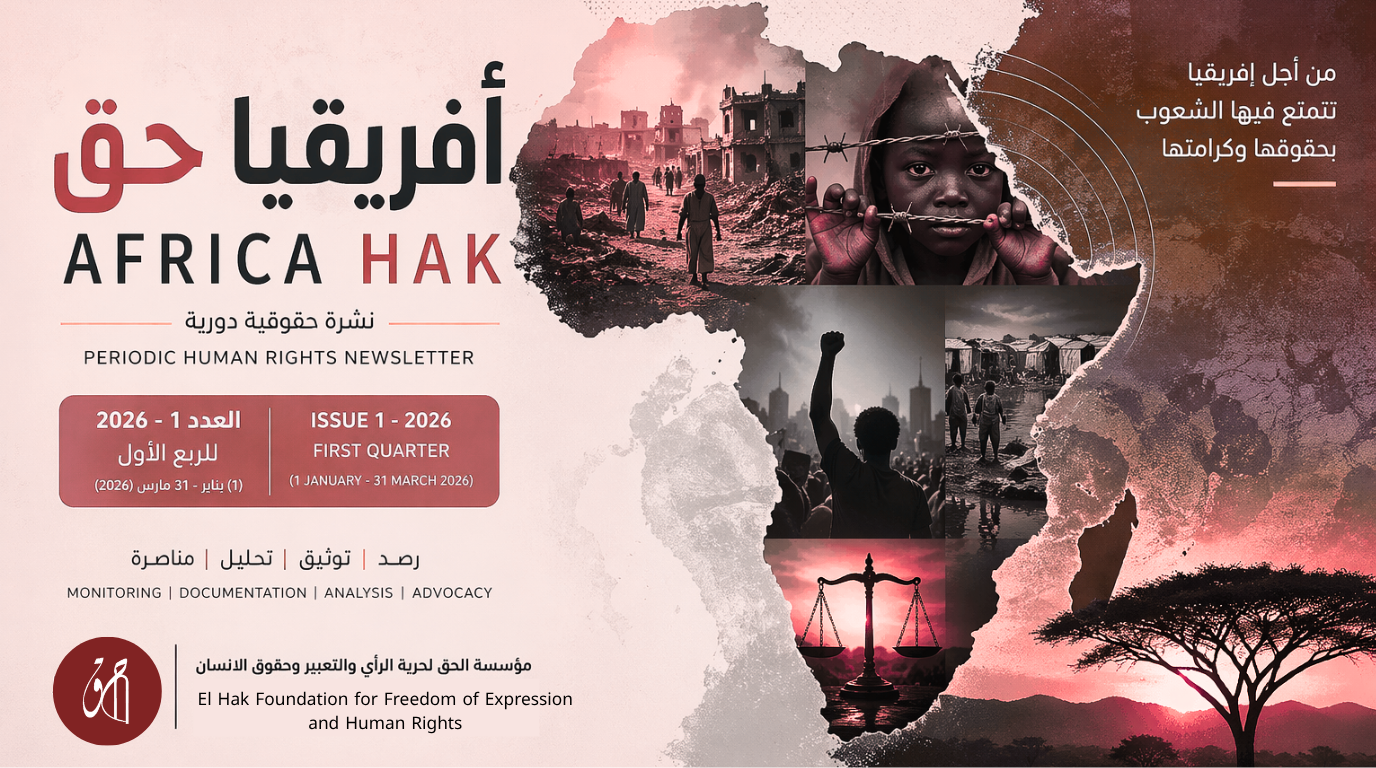
أفريقيا حق | Africa Hak
العدد 1 – 2026 | Issue 1 – 2026
الربع الأول (1 يناير – 31 مارس 2026) | First Quarter (January 1 – March 31, 2026)
الأقسام العربية: |
English Sections: |
1) الملخص التنفيذي
يكشف الرصد الحقوقي لهذا الربع عن تقاطعات حرجة بين النزاعات المسلحة وحالة الفضاء المدني، مما أفرز تداعيات بالغة الخطورة على التمتع بالحقوق الأساسية. على صعيد الآليات الإقليمية، سجل الربع الأول محطة تاريخية في مسار العدالة الانتقالية؛ حيث تبنت القمة التاسعة والثلاثون للاتحاد الأفريقي في 15 فبراير 2026 “إعلان الجزائر”، والذي صنف رسمياً الاستعمار والعبودية كجرائم ضد الإنسانية، معلناً انطلاق “عقد الاتحاد الأفريقي للتعويضات 2026-2035″، وتحديد يوم 30 نوفمبر يوماً أفريقياً لإحياء ذكرى الضحايا.
في سياق النزاعات المسلحة، وثقت الآليات الدولية تصاعداً في الانتهاكات الجسيمة للقانون الدولي الإنساني، ولا سيما مبدأي التمييز والحيطة. في السودان، خلصت بعثة الأمم المتحدة لتقصي الحقائق إلى توافر “سمات الإبادة الجماعية” في ولاية شمال دارفور، وترافق ذلك مع استهداف ممنهج للأشخاص ذوي الإعاقة. وفي جمهورية الكونغو الديمقراطية، تصاعدت وتيرة الهجمات بالطائرات المسيرة في المناطق المكتظة بالسكان، مما أسفر عن سقوط ضحايا مدنيين وعرقلة وصول الإغاثة الإنسانية، بما في ذلك مقتل موظف أممي في مارس.
وعلى صعيد الحقوق المدنية والسياسية، أظهرت متابعة الدورات الانتخابية وما تلاها في دولتي أوغندا وتنزانيا نمطاً متزايداً من الإجراءات المقيدة للفضاء المدني، تضمنت تعليق عمل منظمات حقوقية غير حكومية، وتقييد حريات التعبير والتجمع السلمي. أما فيما يخص الحقوق الاقتصادية والاجتماعية والثقافية، فقد شكلت عمليات الإخلاء القسري واسعة النطاق في لاغوس بنيجيريا تحدياً جسيماً لحق السكن اللائق، وسط تحذيرات أممية من ارتقائها لمستوى “الإبادة السكنية”.
2) الاستعراض الموضوعي لاتجاهات حقوق الإنسان
تُظهر التقارير الأممية تصاعداً مقلقاً في استخدام التقنيات العسكرية الجوية (كالطائرات المسيرة) في سياقات النزاع غير المتكافئ، مما أسفر عن انتهاكات صريحة لحق المدنيين في الحياة والأمن الجسدي. في شرق جمهورية الكونغو الديمقراطية، تم توثيق تدمير بنى تحتية حيوية مدنية، مما أعاق وصول المساعدات الإنسانية وعرّض الفئات الأشد ضعفاً لخطر المجاعة ونقص الإمدادات الطبية. كما برز نمط مقلق يتمثل في “الإبادة السكنية” عبر التدمير الشامل لمقومات الحياة في السياقات الحضرية بدعوى التطوير أو السلامة، كما في نيجيريا، مما يمثل انتهاكاً للمادة 11 من العهد الدولي الخاص بالحقوق الاقتصادية والاجتماعية والثقافية.
الفضاء المدني والحقوق السياسية خلال الدورات الانتخابية
شهدت الفترات الانتخابية في بعض دول شرق أفريقيا تفعيلاً للتشريعات الأمنية وتنظيم الفضاء الرقمي كأدوات لتقييد المراقبة المدنية المستقلة. وثقت التقارير استخدام التعليق الإداري لمنظمات المجتمع المدني وحقوق الإنسان، وتفعيل المحاكمات العسكرية للمدنيين، وفرض رقابة مشددة على وسائل الإعلام، وهو ما يُشكل تراجعاً في التزامات الدول بموجب المادة 21 من العهد الدولي الخاص بالحقوق المدنية والسياسية، والميثاق الأفريقي للديمقراطية والانتخابات والحكم.
الحقوق الاقتصادية والاجتماعية: حيازة الأراضي والحق في الغذاء
أكد تقرير المقرر الخاص للأمم المتحدة المعني بالحق في الغذاء على الرابط الهيكلي بين تركيز ملكية الأراضي والتهجير القسري وانعدام الأمن الغذائي، مشيراً إلى تأثر أنظمة الحيازة العرفية للشعوب الأصلية. تقاطعت هذه الاستنتاجات مع رصد استمرار الإخلاء القسري في تنزانيا واستغلال الموارد المعدنية في مناطق النزاع بالكونغو الديمقراطية، مما يعمق الانتهاكات الاقتصادية المرتبطة بسبل العيش.
العدالة التاريخية وحقوق المنحدرين من أصل أفريقي
يُشكل اعتماد “إعلان الجزائر” من قِبل الاتحاد الأفريقي تطوراً حاسماً في منظومة حقوق الإنسان القارية. فالتوصيف القانوني للاستعمار والعبودية كجرائم ضد الإنسانية يُلزم المجتمع الدولي بالانتقال من الاعتراف الأخلاقي إلى مأسسة آليات التعويض، بالتوازي مع جهود اللجنة الأفريقية لتعزيز إدماج الجاليات المنحدرة من أصل أفريقي وتسهيل حقهم في العودة.
3) ملفات الدول
مع تجاوز النزاع المسلح حاجز الألف يوم في يناير 2026، استمرت معدلات النزوح القسري في الارتفاع لتتجاوز 12 مليون شخص، وسط تقارير موثقة عن انتهاكات واسعة النطاق للقانون الدولي الإنساني من قِبل طرفي النزاع.
انتهاكات الفاشر وتقارير تقصي الحقائق:
في 19 فبراير 2026، أصدرت بعثة الأمم المتحدة المستقلة لتقصي الحقائق تقريرها الذي وثق وقوع انتهاكات ترقى إلى “سمات الإبادة الجماعية” وجرائم حرب وجرائم ضد الإنسانية إبان حصار قوات الدعم السريع لمدينة الفاشر. وأشار التقرير، المدعوم بأدلة الأقمار الصناعية، إلى توافر “القصد الجنائي الخاص” لتدمير مجتمعات عرقية محددة (الزغاوة والفور)، وتوثيق تحويل المرافق المدنية كالجامعات والمستشفيات إلى مسارح للقتل الجماعي، مما أدى إلى فرار نحو 100,000 مدني.
استهداف الأشخاص ذوي الإعاقة:
أدانت اللجنة الأفريقية لحقوق الإنسان والشعوب في 23 مارس 2026 الانتهاكات الموجهة ضد الأشخاص ذوي الإعاقة في الفاشر. ووثقت اللجنة حالات إعدام خارج نطاق القضاء، ومصادرة للمعدات المساعدة على الحركة، ومعاملة حاطة بالكرامة، في انتهاك مباشر للمادة 18(4) من الميثاق الأفريقي وبروتوكول حقوق الأشخاص ذوي الإعاقة.
أبرز الانتهاكات الموثقة في الفاشر:
التفاصيل القانونية والموضوعية
– التكييف القانوني للانتهاكات: جرائم حرب، جرائم ضد الإنسانية، التأسيس لتوافر القصد الجنائي الخاص للإبادة.
– الاستهداف العرقي والهوياتي: استهداف منهجي لمجتمعات الزغاوة والفور.
– الأعيان المدنية المستهدفة: المستشفى السعودي، جامعة الفاشر، مسارات النزوح الإنساني.
– الفئات المستضعفة: استهداف وحشي للأشخاص ذوي الإعاقة ومصادرة وسائل تنقلهم.
المواقف والردود الرسمية والدولية:
– الحكومة السودانية: قدمت وزارة الخارجية خارطة طريق لإنهاء الحرب، شملت تشكيل حكومة مدنية وإجراء انتخابات، وتم عرضها على المنظمات الإقليمية والدولية.
– مجلس الأمن الدولي: خلال رئاستها لمجلس الأمن في فبراير 2026، أعلنت المملكة المتحدة عن حزم عقوبات تستهدف قيادات عسكرية وشبكات إمداد الأسلحة لكلا الطرفين.
– مجموعة النواة الدولية (Sudan Core Group): أعلنت في أواخر فبراير عن تشكيل تحالف لضمان المساءلة ومنع المزيد من الفظائع، مطالبة بوصول الآليات القضائية الدولية.
2. جمهورية الكونغو الديمقراطية
شهدت الأقاليم الشرقية تفاقماً حاداً في الأزمة الإنسانية رغم توقيع آليات لمراقبة وقف إطلاق النار في فبراير 2026. وتتميز المرحلة الراهنة بزيادة ملحوظة في استخدام التقنيات غير المأهولة.
الهجمات الجوية وحماية الأعيان المدنية:
أكدت تقارير الرصد الحقوقي شن القوات الحكومية والميليشيات المتحالفة معها عشرات الغارات بالطائرات المسيرة في منطقة كيفو الجنوبية منذ بداية يناير. ووثقت التقارير ضربات أسفرت عن ضحايا مدنيين (من بينهم أطفال وكبار سن)، وتدمير مقومات مجتمعية كالمحطات الإذاعية وأماكن العبادة. في 11 مارس 2026، أسفرت غارة بطائرة مسيرة في غوما عن مقتل موظف إغاثة يعمل لدى منظمة اليونيسف وإصابة مدنيين آخرين، وهو ما حذرت الأمم المتحدة من ارتقائه لجرائم حرب.
القيود الصارمة على الوصول الإنساني:
تفرض الأطراف المتنازعة (بما فيها حركة 23 مارس، الميليشيات المحلية، والقوات الحكومية) حصاراً خانقاً على المجتمعات المحلية في المرتفعات. وشملت الانتهاكات الاحتجاز التعسفي، التجنيد القسري للمدنيين لاستخدامهم كدروع بشرية، وفرض ضرائب غير قانونية عبر حواجز الطرق، مما أسفر عن نقص حاد في الأدوية والسلع الأساسية.
المواقف والردود الرسمية:
– الحكومة الرواندية: نفت رواندا استهداف الأراضي الكونغولية، محذرة من أن التعاون بين القوات الحكومية الكونغولية والميليشيات المسلحة يمثل تهديداً للأمن الإقليمي ومطالبة بحل سياسي.
– الآليات الأممية: طالب خبراء حقوق الإنسان بضرورة كبح جماح الميليشيات وضمان إجراء تحقيقات محايدة في عرقلة المساعدات واستهداف العاملين في المجال الإنساني.
3. جمهورية أوغندا
في سياق الانتخابات العامة (يناير – فبراير 2026)، رصدت مفوضية الأمم المتحدة السامية لحقوق الإنسان تصاعداً في التدابير المقيدة للفضاء الديمقراطي.
التضييق الإداري والتشريعي على المجتمع المدني:
وفقاً للتقرير الأممي الصادر في 9 يناير، وظفت السلطات تعديلات تشريعية (كقانون إساءة استخدام الكمبيوتر وقانون المنظمات غير الحكومية) لإضفاء شرعية على تقييد المعارضة. وفي 12 يناير 2026، أصدر المكتب الوطني للمنظمات غير الحكومية قرارات بالتعليق الفوري لعمل أكثر من 10 منظمات حقوقية بارزة معنية بمراقبة الانتخابات وحماية الحريات.
الحقوق المدنية والسياسية وحرية الإعلام:
وثقت التقارير استمرار الاحتجاز التعسفي لشخصيات معارضة بارزة وحقوقيين (مثل كيزا بيسيجي ود. سارة بيريتي)، واستخدام القوة المفرطة ضد التجمعات السلمية. كما أصدرت لجنة الاتصالات الوطنية توجيهات تحظر بث محتوى يطعن في نزاهة الانتخابات بشكل مستقل، مما يشكل قيوداً إضافية على حرية التعبير واستقلالية الصحافة.
4. جمهورية نيجيريا الاتحادية
وثقت النشرة مسارين رئيسيين للانتهاكات: الإخلاء القسري في المناطق الحضرية، والعمليات العسكرية في شمال البلاد.
الإخلاء القسري في لاغوس (مجتمع ماكوكو):
تعرضت تجمعات سكنية في منطقة “ماكوكو” لعمليات هدم واسعة النطاق من قبل السلطات المحلية، مما أدى إلى تشريد أكثر من 40,000 شخص وتدمير منشآت صحية وتعليمية. وفي 19 فبراير 2026، أصدر خبراء حقوق الإنسان بالأمم المتحدة بياناً صنفوا فيه هذه العمليات كـ “إبادة سكنية” (Domicide)، مؤكدين أنها ترقى لجرائم ضد الإنسانية تولد مسؤولية جنائية ومدنية، نظراً لترك العائلات دون مأوى أو بدائل.
– الموقف الرسمي: بررت حكومة ولاية لاغوس الإجراءات بضرورات السلامة العامة لتجنب أخطار خطوط التوتر العالي وحماية البنية التحتية والممرات المائية، معتبرة إياها “قرارات صعبة لكنها ضرورية”.
التزام العمليات العسكرية بمبدأ الحيطة (ولاية يوبي):
أدانت اللجنة الأفريقية لحقوق الإنسان غارة جوية نفذها الجيش النيجيري في 11 أبريل (مطلع الربع الثاني) استهدفت عن طريق الخطأ سوقاً محلياً، مما أدى لسقوط عشرات الضحايا المدنيين. وطالبت اللجنة بتحقيق مستقل وشفاف، ومراجعة قواعد الاشتباك لضمان الامتثال لمبادئ التمييز والحيطة المقررة في القانون الدولي الإنساني.
5. جمهورية إثيوبيا الفيدرالية الديمقراطية
تركزت الرقابة الحقوقية على مسارين: حماية المدنيين في مناطق النزاع، وإعمال الحقوق الاقتصادية للفئات المهمشة.
حماية المدنيين والحق في الحياة:
أعربت منظمات وهيئات دولية عن بالغ قلقها إزاء التقارير التي وثقت عمليات قتل استهدفت مدنيين في منطقة أمهرة (ولا سيما حوادث “ميراوي”)، فضلاً عن تداعيات تمديد حالة الطوارئ على الفضاء المدني. وفي 4 مارس 2026، أصدرت اللجنة الإثيوبية لحقوق الإنسان (EHRC) بياناً رسمياً يطالب الحكومتين الفيدرالية والإقليمية في أوروميا بنشر قوات أمنية كافية وتفعيل آليات المساءلة لوقف الهجمات الموثقة ضد المدنيين في منطقة أرسي، والتي تضمنت جرائم قتل وتدمير للممتلكات.
الحقوق الاقتصادية: إدماج الأشخاص ذوي الإعاقة:
أجرت اللجنة الإثيوبية لحقوق الإنسان مشاورات موسعة كشفت عن استبعاد هيكلي للأشخاص ذوي الإعاقة من التوظيف في القطاع العام، وتحديد ثغرات في تطبيق التوجيهات التشريعية الداعمة لإدماجهم في سوق العمل الإقليمي.
6. جمهورية تنزانيا المتحدة
استمرت تبعات الحملة الأمنية التي أعقبت انتخابات أواخر عام 2025 في التأثير السلبي على حالة حقوق الإنسان.
التضييق على التجمع السلمي وحرية التعبير:
أصدر خبراء الأمم المتحدة ومنظمات دولية تقارير تفيد بوقوع انتهاكات شملت الاعتقال التعسفي للمعارضين، وحالات الإخفاء القسري التي طالت ناشطين ومسؤولين سياسيين، واستخدام القوة غير المتناسبة ضد المتظاهرين السلميين.
– الموقف الرسمي: نفت الحكومة التنزانية، عبر إدارة خدمات المعلومات، صحة التقارير الصادرة عن المنظمات الدولية (مثل هيومن رايتس ووتش)، معتبرة إياها مزاعم لا أساس لها تهدف إلى تشويه صورة البلاد. وجددت التزامها الدستوري المطلق بحماية حقوق الإنسان وحرية المشاركة السياسية بموجب قوانين الانتخابات المعدلة.
4) آليات الاتحاد الأفريقي والتطورات القارية
اعتمدت الدورة التاسعة والثلاثون للاتحاد الأفريقي (فبراير 2026) حزمة قرارات شكلت إطاراً مؤسسياً للمطالبة بالعدالة التاريخية. أبرز المخرجات:
– إعلان الجزائر: تصنيف الاستعمار والترحيل القسري والعبودية كجرائم ضد الإنسانية لا تسقط بالتقادم.
– يوم الذكرى: إعلان يوم 30 نوفمبر يوماً أفريقياً لتخليد ذكرى ضحايا تجارة الرقيق والاستعمار والفصل العنصري.
– عقد التعويضات: إطلاق “عقد الاتحاد الأفريقي للتعويضات 2026-2035” كإطار زمني لحشد الجهود الدبلوماسية والقانونية لإلزام القوى الاستعمارية بالمسؤولية، وتعيين غانا كدولة رائدة لهذا الملف.
تعزيز الشراكة مع المجتمع المدني (ECOSOCC)
كثف المجلس الاقتصادي والاجتماعي والثقافي للاتحاد الأفريقي برامجه الهادفة لتعزيز دور المجتمع المدني القاري. وعقد المجلس حوارات رفيعة المستوى لدمج شبكات المجتمع المدني في آليات الإنذار المبكر وحل النزاعات، إلى جانب تطوير استراتيجيات لتعزيز حرية تنقل العمالة وضمان استدامة الخدمات الأساسية، مما يعزز الملكية الأفريقية لمسارات بناء السلام والتنمية.
1) Executive Summary
Human rights monitoring for this quarter reveals critical intersections between armed conflicts and the state of civic space, which has produced severe repercussions on the enjoyment of fundamental rights. At the level of regional mechanisms, the first quarter marked a historic milestone in the path of transitional justice; the 39th African Union Summit adopted the “Algiers Declaration” on February 15, 2026, officially classifying colonialism and slavery as crimes against humanity, announcing the launch of the “African Union Decade of Reparations 2026-2035,” and designating November 30 as an African day to commemorate the victims.
In the context of armed conflicts, international mechanisms documented an escalation in grave violations of international humanitarian law, particularly the principles of distinction and precaution. In Sudan, the UN Fact-Finding Mission concluded the presence of “hallmarks of genocide” in North Darfur State, accompanied by the systematic targeting of persons with disabilities. In the Democratic Republic of the Congo, the frequency of drone attacks escalated in densely populated areas, resulting in civilian casualties and hindering humanitarian relief access, including the killing of a UN aid worker in March.
At the level of civil and political rights, the monitoring of electoral cycles and their aftermaths in Uganda and Tanzania showed an increasing pattern of restrictive measures on civic space, including the suspension of non-governmental human rights organizations and restrictions on freedoms of expression and peaceful assembly. Regarding economic, social, and cultural rights, large-scale forced evictions in Lagos, Nigeria, posed a severe challenge to the right to adequate housing, amid UN warnings that they amount to “domicide.”
2) Thematic Review of Human Rights Trends
UN reports indicate an alarming escalation in the English use of military aerial technologies (such as drones) in asymmetrical conflict contexts, resulting in explicit violations of civilians’ right to life and physical security. In the eastern Democratic Republic of the Congo, the destruction of vital civilian infrastructure was documented, obstructing humanitarian aid and exposing the most vulnerable groups to the risk of famine and medical supply shortages. A disturbing pattern also emerged represented by “domicide” through the comprehensive destruction of the elements of life in urban contexts under the pretext of development or safety, as in Nigeria, violating Article 11 of the International Covenant on Economic, Social and Cultural Rights.
Civic Space and Political Rights during Electoral Cycles
Electoral periods in some East African countries witnessed the activation of security legislation and the regulation of digital space as tools to restrict independent civil monitoring. Reports documented the administrative suspension of civil society and human rights organizations, the activation of military trials for civilians, and the imposition of strict censorship on the media, representing a regression in states’ obligations under Article 21 of the International Covenant on Civil and Political Rights, and the African Charter on Democracy, Elections and Governance.
Economic and Social Rights: Land Tenure and the Right to Food
The report of the UN Special Rapporteur on the right to food emphasized the structural link between the concentration of land ownership, forced displacement, and food insecurity, pointing to the impact on the customary tenure systems of indigenous peoples. These conclusions intersected with the monitoring of continued forced evictions in Tanzania and the exploitation of mineral resources in conflict zones in the DRC, deepening economic violations related to livelihoods.
Historical Justice and the Rights of People of African Descent
The adoption of the “Algiers Declaration” by the African Union constitutes a crucial development in the continental human rights system. The legal characterization of colonialism and slavery as crimes against humanity obliges the international community to transition from moral recognition to the institutionalization of reparation mechanisms, in parallel with the African Commission’s efforts to enhance the integration of communities of African descent and facilitate their right of return.
3) Country Files
As the armed conflict crossed the 1,000-day mark in January 2026, forced displacement rates continued to rise, exceeding 12 million people, amid documented reports of widespread violations of international humanitarian law by both parties to the conflict.
El Fasher Violations and Fact-Finding Reports:
On February 19, 2026, the UN Independent Fact-Finding Mission issued its report documenting the occurrence of violations amounting to “hallmarks of genocide,” war crimes, and crimes against humanity during the Rapid Support Forces’ siege of the city of El Fasher. The report, supported by satellite evidence, indicated the presence of “specific criminal intent” to destroy specific ethnic communities (the Zaghawa and Fur), and documented the transformation of civilian facilities such as universities and hospitals into mass killing sites, prompting approximately 100,000 civilians to flee.
Targeting of Persons with Disabilities:
The African Commission on Human and Peoples’ Rights condemned on March 23, 2026, the violations directed against persons with disabilities in El Fasher. The Commission documented cases of extrajudicial executions, the confiscation of mobility aids, and degrading treatment, in direct violation of Article 18(4) of the African Charter and the Protocol on the Rights of Persons with Disabilities.
Key Documented Violations in El Fasher:
Legal and Objective Details
– Legal Characterization of Violations: War crimes, crimes against humanity, establishing the specific intent for genocide.
– Ethnic and Identity-Based Targeting: Systematic targeting of the Zaghawa and Fur communities.
– Targeted Civilian Objects: The Saudi Hospital, University of El Fasher, and humanitarian displacement routes.
– Vulnerable Groups: Brutal targeting of persons with disabilities and confiscation of their mobility aids.
Official and International Positions and Responses:
– The Sudanese Government: The Ministry of Foreign Affairs presented a roadmap to end the war, including the formation of a civil government and holding elections, which was presented to regional and international organizations.
– The UN Security Council: During its presidency of the Security Council in February 2026, the United Kingdom announced sanctions packages targeting military leaders and weapons supply networks for both parties.
– The Sudan Core Group: Announced in late February the formation of a coalition to ensure accountability and prevent further atrocities, demanding access for international judicial mechanisms.
2. Democratic Republic of the Congo
The eastern provinces witnessed a severe deterioration in the humanitarian crisis despite the signing of ceasefire monitoring mechanisms in February 2026. The current phase is characterized by a significant increase in the use of unmanned technologies.
Aerial Attacks and Protection of Civilian Objects:
Human rights monitoring reports confirmed that government forces and allied militias launched dozens of drone strikes in the South Kivu region since the beginning of January. The reports documented strikes that resulted in civilian casualties (including children and the elderly), and the destruction of community assets such as radio stations and places of worship. On March 11, 2026, a drone strike in Goma resulted in the killing of an aid worker employed by UNICEF and the injury of other civilians, which the UN warned could amount to war crimes.
Severe Restrictions on Humanitarian Access:
The conflicting parties (including the M23 movement, local militias, and government forces) impose a suffocating siege on local communities in the highlands. Violations included arbitrary detention, the forced recruitment of civilians to be used as human shields, and the imposition of illegal taxes through roadblocks, resulting in severe shortages of medicines and basic commodities.
Official Responses and Positions:
– The Rwandan Government: Rwanda denied targeting Congolese territory, warning that cooperation between Congolese government forces and armed militias represents a threat to regional security and demanding a political solution.
– UN Mechanisms: Human rights experts demanded the necessity to rein in the militias and ensure impartial investigations into the obstruction of aid and the targeting of humanitarian workers.
3. Republic of Uganda
In the context of the general elections (January – February 2026), the UN Office of the High Commissioner for Human Rights monitored an escalation in restrictive measures on the democratic space.
Administrative and Legislative Restrictions on Civil Society:
According to the UN report issued on January 9, authorities employed legislative amendments (such as the Computer Misuse Act and the Non-Governmental Organizations Act) to legitimize the restriction of the opposition. On January 12, 2026, the National Bureau for Non-Governmental Organizations issued decisions immediately suspending the operations of more than 10 prominent human rights organizations concerned with election monitoring and the protection of freedoms.
Civil and Political Rights and Media Freedom:
Reports documented the continued arbitrary detention of prominent opposition figures and human rights defenders (such as Kizza Besigye and Dr. Sarah Bireete), and the use of excessive force against peaceful gatherings. The National Communications Commission also issued directives banning the broadcasting of content that independently challenges the integrity of the elections, constituting additional restrictions on freedom of expression and press independence.
4. Federal Republic of Nigeria
The newsletter documented two main tracks of violations: forced evictions in urban areas, and military operations in the north of the country.
Forced Evictions in Lagos (Makoko Community):
Residential clusters in the “Makoko” area were subjected to large-scale demolition operations by local authorities, resulting in the displacement of over 40,000 people and the destruction of health and educational facilities. On February 19, 2026, UN human rights experts issued a statement classifying these operations as “domicide,” asserting that they amount to crimes against humanity generating criminal and civil liability, given that families were left without shelter or alternatives.
– Official Position: The Lagos State government justified the measures by public safety necessities to avoid the dangers of high-tension lines and protect infrastructure and waterways, considering them “difficult but necessary decisions.”
Commitment of Military Operations to the Principle of Precaution (Yobe State):
The African Commission on Human Rights condemned an airstrike carried out by the Nigerian army on April 11 (early in the second quarter) that mistakenly targeted a local market, resulting in dozens of civilian casualties. The Commission demanded an independent and transparent investigation, and a review of the rules of engagement to ensure compliance with the principles of distinction and precaution established in international humanitarian law.
5. Federal Democratic Republic of Ethiopia
Human rights monitoring focused on two tracks: the protection of civilians in conflict zones, and the realization of economic rights for marginalized groups.
Protection of Civilians and the Right to Life:
International organizations and bodies expressed deep concern over reports documenting targeted killings of civilians in the Amhara region (particularly the “Merawi” incidents), as well as the repercussions of the extension of the state of emergency on civic space. On March 4, 2026, the Ethiopian Human Rights Commission (EHRC) issued an official statement demanding the federal government and the regional government in Oromia to deploy adequate security forces and activate accountability mechanisms to stop documented attacks against civilians in the Arsi zone, which included murders and the destruction of property.
Economic Rights: Inclusion of Persons with Disabilities:
The Ethiopian Human Rights Commission conducted extensive consultations revealing structural exclusion of persons with disabilities from public sector employment, identifying gaps in the implementation of legislative directives supporting their integration into the regional labor market.
6. United Republic of Tanzania
The repercussions of the security campaign that followed the late 2025 elections continued to negatively impact the human rights situation.
Restrictions on Peaceful Assembly and Freedom of Expression:
UN experts and international organizations issued reports indicating the occurrence of violations that included the arbitrary arrest of opponents, cases of enforced disappearances affecting activists and political officials, and the use of disproportionate force against peaceful protesters.
– Official Position: The Tanzanian government, through the Information Services Department, denied the validity of the reports issued by international organizations (such as Human Rights Watch), considering them baseless allegations aimed at tarnishing the country’s image. It renewed its absolute constitutional commitment to protecting human rights and freedom of political participation under the amended election laws.
4) African Union Mechanisms and Continental Developments
The 39th Session of the African Union (February 2026) adopted a package of decisions that formed an institutional framework for demanding historical justice. Key outcomes included:
– Algiers Declaration: Classifying colonialism, forced deportation, and slavery as crimes against humanity not subject to a statute of limitations.
– Remembrance Day: Declaring November 30 as an African day to immortalize the memory of the victims of the slave trade, colonialism, and apartheid.
– Decade of Reparations: Launching the “African Union Decade of Reparations 2026-2035” as a timeframe to mobilize diplomatic and legal efforts to hold colonial powers accountable, and designating Ghana as a leading state for this file.
Enhancing Partnership with Civil Society (ECOSOCC)
The Economic, Social and Cultural Council of the African Union intensified its programs aimed at enhancing the role of continental civil society. The Council held high-level dialogues to integrate civil society networks into early warning and conflict resolution mechanisms, along with developing strategies to enhance the freedom of movement of labor and ensure the sustainability of basic services, thereby strengthening African ownership of peacebuilding and development pathways.
“`